Breakfast: The First Remedy for Losing Weight!
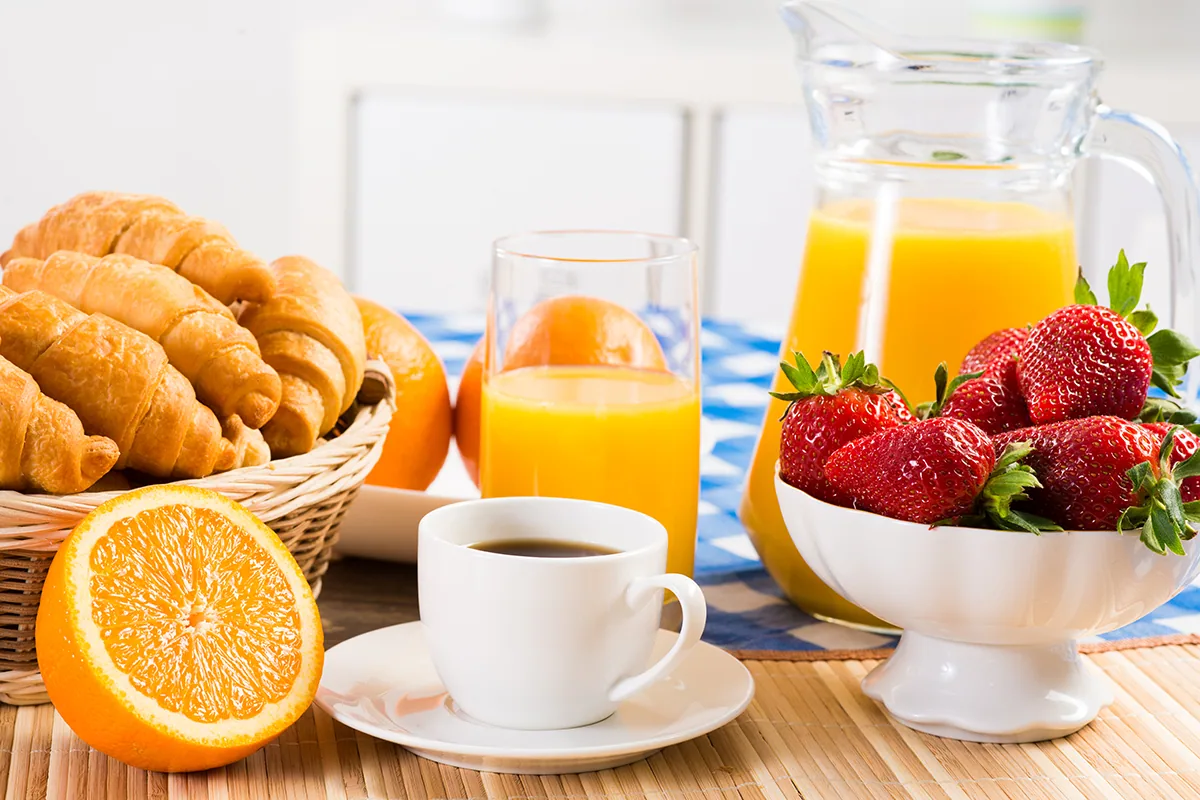
Several studies have shown that eating a big breakfast, within an hour of waking up, helps maintain a regular body weight.
Muscle catabolism changes if you don’t eat within an hour of waking, as a response to a danger signal. Our metabolic system is still that of the Stone Age, so skipping breakfast sends a signal of famine, while eating sends a signal of abundance that prevents a metabolic slowdown. If, on the contrary, you skip breakfast, a mechanism of insulin resistance is triggered. In that case even if I eat celery I turn it into fat.
Moreover, having breakfast improves your mood: it is an antidepressant and there is a direct relationship between depression, insulin resistance and obesity.
If I don’t send my brain signals of abundance, a hormone called leptin, also known as the satiety hormone, is not activated. Leptin increases glucose metabolism as well as the oxidation rate of fatty acid reserves, and the rate of oxygen consumption, making energy expenditure higher. The hormone also has the ability to reduce the sense of hunger and, consequently, calorie intake. Through its metabolic and appetite-regulating actions, therefore, leptin controls weight, and this gives it the status of an anti-obesity factor. Insulin resistance inhibits leptin.
The main choice is between a sweet and a savory breakfast, but by what criterion? We Italians are mostly used to a sweet breakfast, and many people reject even the idea of a savory breakfast first thing in the morning. What should lead us to experiment with a savory breakfast is the more or less compulsive need for sugar and/or carbohydrates that hits between 10 and 11 a.m. when we have had a breakfast of bread and jam or cappuccino and croissant. The blood sugar dip that shows up mid-morning or mid-afternoon indicates the need to regulate blood glucose better in order to give the body more stability, avoiding hyper- and hypoglycemic spikes that in the long run can lead to unpleasant consequences.
In this case a savory breakfast will give you more staying power and, above all, a sense of well-being, choosing among the following options: coffee, tea (to be avoided if you are constipated), barley coffee (to be avoided if you have gastritis), bread (always preferably toasted to help manage the yeasts, which are knocked out by toasting), oil and salt, bread and tomato always dressed with oil and salt, bread and prosciutto crudo or speck, bread and ricotta, bread and egg (in case of morning fatigue).
To bread with oil and salt you can add a few drops of lemon juice to stimulate a sluggish liver, or a little grated ginger to activate the gastric juices and aid digestion.
Always add a fresh-squeezed juice or a piece of fresh fruit of your choice: kiwi if you tend toward constipation, apple with the skin on or grapes, again for constipation, or any other fruit you like.
Adding oilseeds is also very useful, alternating them daily. They can also be added to whole plain yogurt, especially when you have little time for a more substantial breakfast.
Avoid industrial cereals because of the possible addition of excess sugars or of unidentifiable vegetable fats, and avoid industrial croissants, but also bakery ones, unless they are made with butter and not with vegetable margarines. The same goes for cookies.
In the case of a sweet breakfast, use whole milk with toasted bread, butter and jam or honey (not industrial), even without butter if the milk is whole, because the fat content, essential for slowing the rise in sugars, is provided by the milk.
Yogurt is also an excellent choice for breakfast, keeping in mind that it has a higher protein content than fresh milk.
In case of milk intolerance, pair bread, butter and jam with an orange juice, a piece of fruit and an herbal tea. The presence of oilseeds is always useful as a supplement of essential fatty acids and for their pool of highly bioavailable vitamins and minerals.
It is important to stress that a breakfast eaten calmly is essential because slow salivation makes satiety signals, driven by ghrelin and cholecystokinin, reach the hypothalamus sooner.