Seasonal Fruit and Vegetables
We all know fruit and vegetables are good for us, everyone tells us so, but why is it so important to choose seasonal produce? What is the difference between in-season and out-of-season produce?
Out-of-season fruit and vegetables are grown in greenhouses with artificial light, picked unripe and ripened in cold storage rooms. Not ripening on the plant means the produce can’t build up important nutrients, especially vitamins, so it ends up poor in them. What’s more, in most cases these products are transported for many km, which translates into a sharp increase in costs for the consumer.
In-season produce is brought to full ripeness naturally, thanks to the sunlight, so it is much richer in vitamins, minerals and phytonutrients, which make it tastier and healthier.
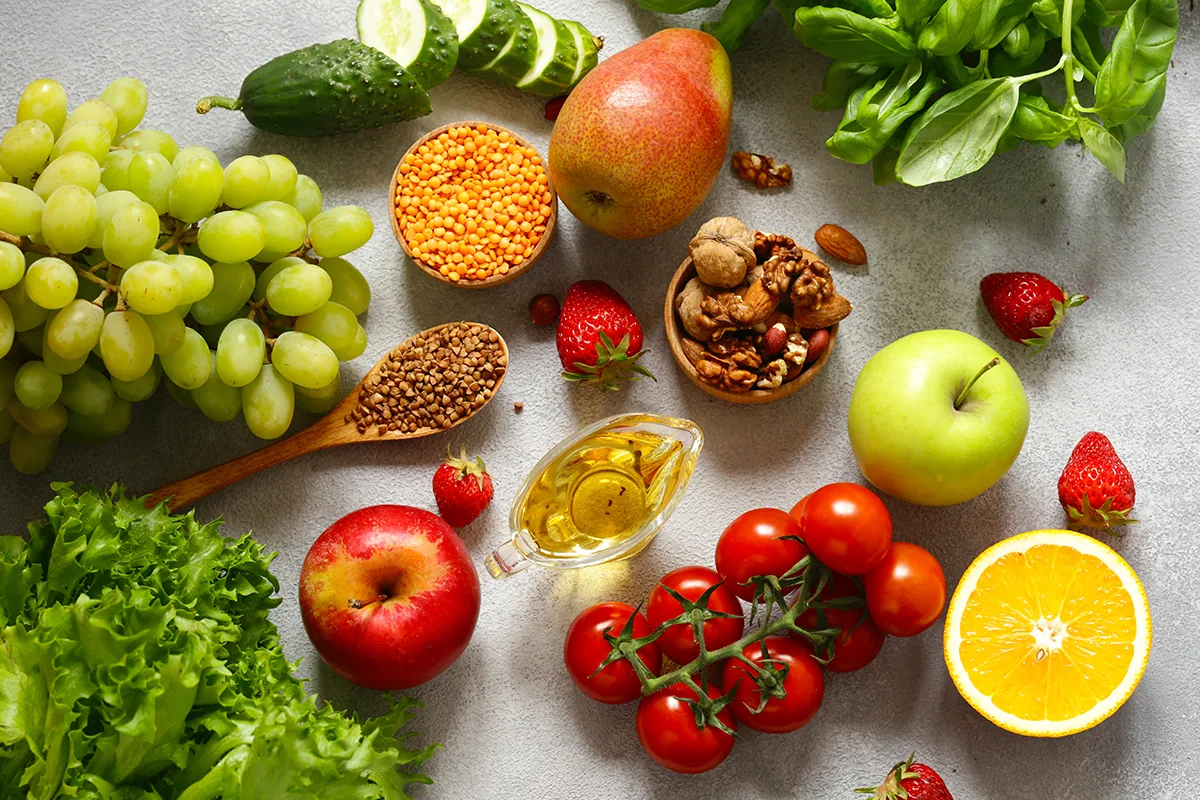
But the amazing thing is that the nutrients it is rich in are exactly the ones our body needs at that particular time of year. Let me explain better: during the winter, cabbages, cauliflower, broccoli, chard, spinach, grapes and figs ripen, rich in Calcium and Vitamin K, which are important for bone and tooth health. In winter we get less sun exposure, so to keep our bones and teeth strong we need to take in more Calcium and Vitamin K through our diet. In addition, in the cold months nature provides us with kiwis, oranges, tangerines, lemons, apples and pears, rich in Vitamin C, which strengthen our immune defenses and protect us from the ailments typical of the cold season, such as colds and the flu.
In summer, when our body needs more hydration because of the heat and sweating, we find watermelon, melon, plums, peaches, cherries, apricots, strawberries and berries, along with tomatoes, eggplant, zucchini and bell peppers, rich in water and minerals. These vegetables also contain carotenoids that protect our skin and eyes from the damage caused by the sun’s rays.
The ones I have just listed are only some of the many beneficial effects of seasonal fruit and vegetables, which contain hundreds of protective substances (anticancer, antioxidant, immune-boosting) that enhance one another, that is, they act in synergy to protect our body and keep it healthy.
That is why it makes little sense to replace fruit and vegetables with tablets and multivitamins! To give a practical example, eating an orange is not the same as taking a Vitamin C tablet; it has in fact been shown that, with the same active ingredient, the effect on our body is stronger if you eat fresh fruit, precisely because of this “boosting” mechanism provided by the other protective substances present in the fruit.
So let’s get used to eating fruit and vegetables every day, let’s buy seasonal products, preferably from local producers, so as to cut costs and reduce the time between harvest and consumption, and if possible organic, so that we can eat all parts of the fruit.