Push-ups: variations and options to feel stronger
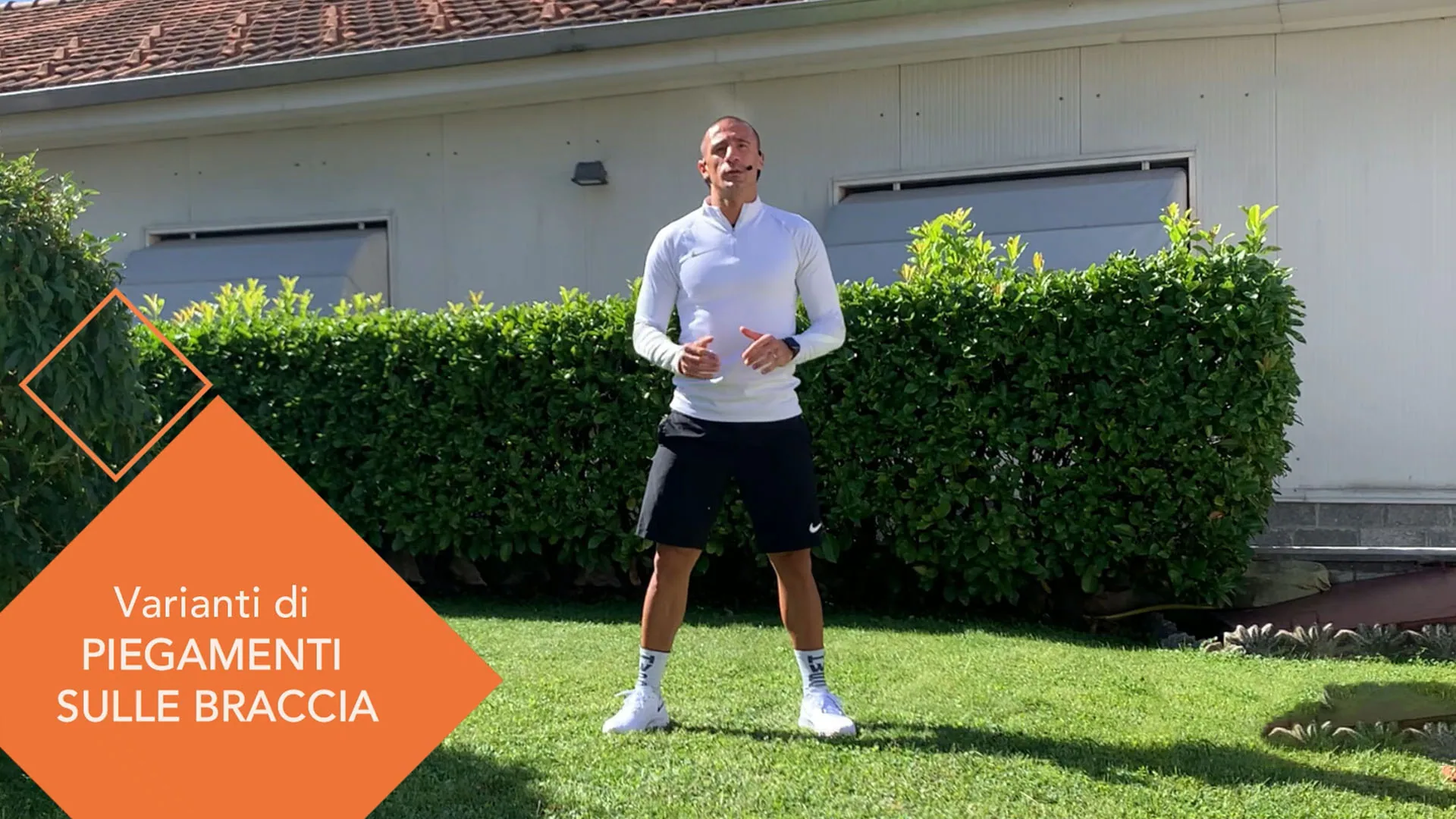
Push-ups are one of the most famous exercises for strengthening the upper body, in particular the chest muscles and the arms.
In Italian this exercise is often called by the wrong name, "flessioni", but the correct name is, in fact, "piegamenti" or alternatively the English term "push up".
It's not a complex exercise in itself, but you need to pay attention to a few details to perform it correctly.
Three tips for good form
- Keep your body tight from head to toe. Avoid rounding your back, draw your belly button toward your spine and squeeze your glutes
- Keep your head in line with your back
- Your elbows should point backward and stay close to your chest; a common mistake is to flare them out too wide. This makes the exercise harder but at the same time works the triceps and helps you avoid possible shoulder injuries. Likewise, remember that your fingertips should point forward, because if you turn your palms inward you'll be more likely to flare your elbows and so do the exercise incorrectly.
How to do push-ups
Variation 1 – For beginners
Rest on your knees and the balls of your feet with your hands under your shoulders in a quadruped position. Once you're in this position, place your hands slightly wider than your shoulders.
From this position, lower your thighs, hips and torso toward the floor until your chest is between your hands.
The most common mistake, which characterizes the form of many beginners, is to bring the face to the floor, whereas the correct form is to bring the chest toward the floor.
Variation 2 – Classic
Compared with the version described above, where the knees also stay on the floor, the variation that demands more effort involves lifting this joint as well. This way the only parts that stay on the floor are the palms and the balls of the feet.
The exercise is the same as the previous one, so from the starting position bring your chest between your hands, without ever touching the floor.
It's very important to not let your hips collapse downward: the push-up should be done by engaging the core and keeping the focus on the chest and arms.
Version 3 – Advanced
This last version creates additional instability, adding difficulty to the exercise.
Keeping everything described for the classic push-up, done with palms and balls of the feet on the floor, at the end of the upward phase bring one hand to the opposite shoulder, touching it. Do the same with the other shoulder on the next rep.
Because of the instability caused by alternately lifting the arms, in this variation, besides the chest and arms, the core is also worked, that is, the group of muscles responsible for maintaining balance.
For the more experienced, or for those who love a challenge, in this video tutorial we talked about spider push-ups, an even more demanding variation recommended for those who are already comfortable with the exercise and have good muscle tone.
Frequent, consistent physical activity should be paired with a balanced, varied diet based on the Mediterranean Diet. Eathlon®, the app of your digital nutritionist, provides a personalized meal plan tailored to your sport and based on your lifestyle. For example, a valuable help for joints and cartilage is adding shellfish to your diet.
Rich in calcium, phosphorus, potassium, cholesterol, selenium and zinc, they provide a share of fat that is essential for sports that require concentration and long-lasting endurance.
When paired appropriately, they will provide the carbohydrate intake needed to energetically support the metabolic processes stimulated by the other components of the meal. The Eathlon® method, the Mediterranean diet personalized and tailored to your sport, suggests the right combination of meals.