Full-body home workout: a 20-minute circuit for fall evenings
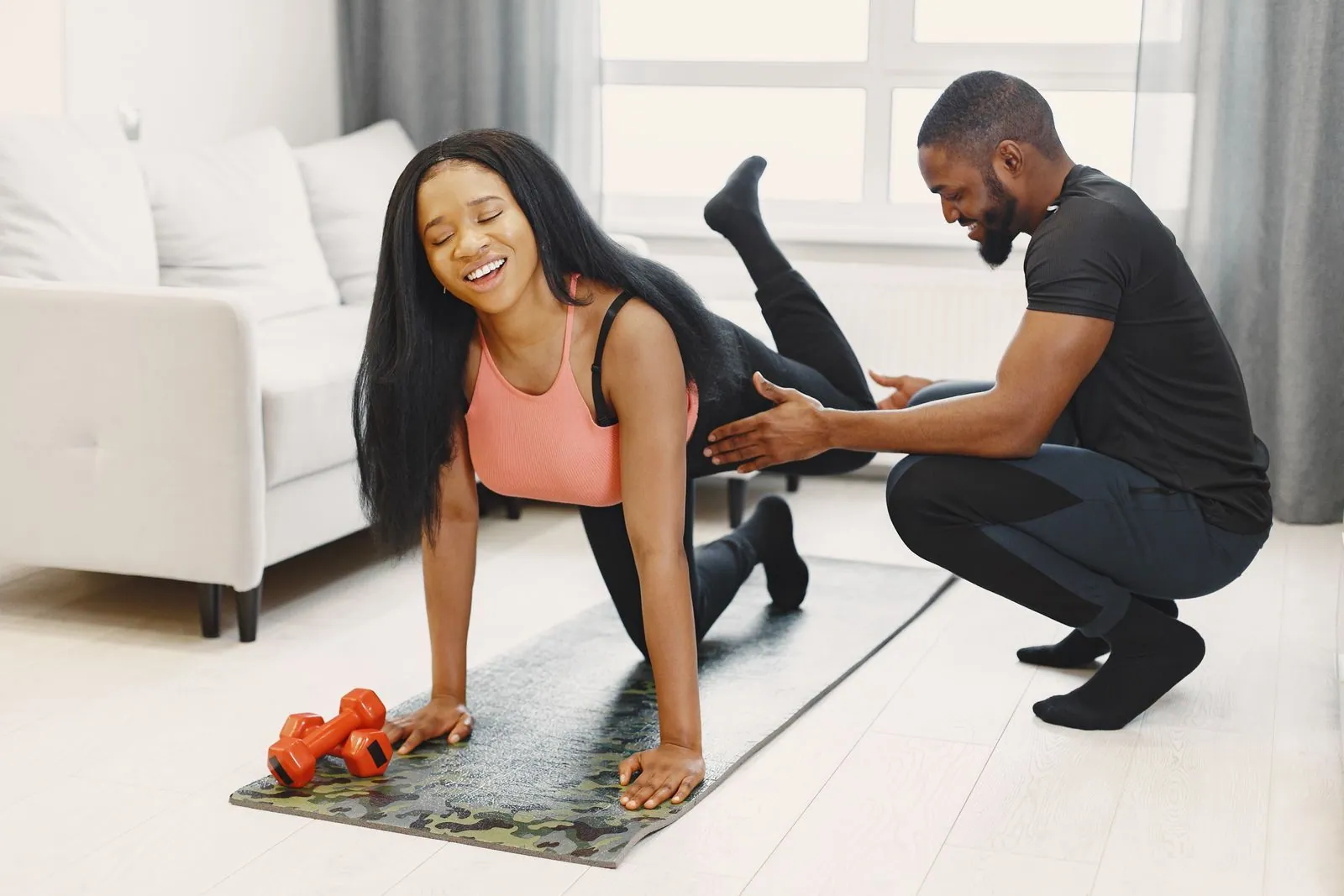
By mid-November the days get noticeably shorter: by the time you leave work it's often already dark, raining or cold, and your outdoor workout is the first thing to go. The risk is losing, in just a few weeks, the consistency you built over the summer and early fall.
The good news is that staying active doesn't require a gym or equipment: all you need is a mat, a sturdy chair and about twenty minutes. Today we're sharing a full-body bodyweight workout you can do at home, designed for recreational athletes, with a simple progression to follow all the way to Christmas.
Why a full-body workout at home
A full-body circuit works your legs, glutes, upper body, arms and core in the same session. It's a practical choice when time is short, because in 20-25 minutes you train your whole body, and it helps you maintain strength and muscle tone even when running, cycling or team sports become harder to fit in.
The World Health Organization guidelines recommend that adults, in addition to aerobic activity, do muscle-strengthening exercises at least twice a week. Two or three sessions like the one below are a concrete way to meet that recommendation without leaving home.
Before you start: a 5-minute warm-up
Even indoors, warming up matters, especially in the evening after hours of sitting. A few minutes is enough:
- 1 minute of marching in place, bringing your knees a little higher each time;
- shoulder, arm, hip and ankle circles (about 10 per side);
- 10 slow squats with a reduced range of motion;
- 1 minute of jumping jacks or, as an alternative, side steps with arm swings.
For a more complete routine, check out these joint mobility exercises you shouldn't skip.
The circuit: 6 exercises for your whole body
Do each exercise for 40 seconds, with 20 seconds of rest before the next one. After all six exercises, rest for 1-2 minutes and repeat the round. Beginners can do 2 rounds; if you're already trained, go for 3 or 4.
1. Squat
Feet shoulder-width apart, toes turned slightly out. Lower yourself by pushing your hips back, as if sitting on a chair, keeping your back straight and your weight on your heels, then stand back up. Easier: lower down until you lightly touch a chair placed behind you.
2. Push-ups
Hands slightly wider than your shoulders, body in a straight line from head to heels. Bend your elbows to bring your chest toward the floor, then push back up. Easier: with your knees on the floor, or with your hands on the edge of the couch or a sturdy table. If you want to mix things up, we've put together several push-up variations.
3. Alternating reverse lunges
From a standing position, step one leg back and lower down until both knees are at roughly a 90-degree angle, then return to the start and switch legs. Reverse lunges are generally easier on the knees than forward lunges. Easier: hold on to the back of a chair with one hand.
4. Glute bridge
Lie on your back with your knees bent and feet flat on the floor. Push through your heels and lift your hips until your shoulders, hips and knees are aligned, hold for a second at the top while squeezing your glutes, then lower slowly.
5. Alternating superman
Lie face down with your arms stretched out in front of you. Lift your right arm and left leg a few inches, hold for a moment and alternate. It's a simple but valuable exercise for your back muscles, which are often neglected by people who spend long hours at a desk. Keep the movement controlled, without forcefully arching your lower back.
6. Plank
Rest on your forearms, elbows under your shoulders, body in a straight line and abs engaged. Breathe steadily without holding your breath. Easier: with your knees on the floor, or holding the position for 20-30 seconds. To make it more challenging, try these plank variations.
Your progression until Christmas
Repeating the same workout the same way gets less effective over time. Here's a simple plan for the coming weeks, with 2-3 sessions a week on non-consecutive days:
- Week 1: 2 rounds, focusing on the easier versions and proper form.
- Week 2: 3 rounds, with the same work and rest times.
- Week 3: 3 rounds, switching to the full version of at least two exercises.
- Week 4: 3-4 rounds, increasing work to 45 seconds and cutting rest to 15.
There's only one rule to follow: make it harder when you can do the last few seconds of each exercise with good form. Joint pain is not a signal to ignore: if it shows up, stop, and if it persists, talk to your doctor.
Cool-down and stretching
At the end of the circuit, spend 5 minutes cooling down: a few deep breaths and gentle stretches for your quads, hamstrings, glutes, chest and back, holding each position for 20-30 seconds without bouncing. Now that your muscles are warm, it's the right time for static stretching.
What to eat if you work out in the evening
If you train after work, you often get to your session many hours after lunch. A light mid-afternoon snack, such as yogurt with fruit, a slice of bread with a thin layer of jam or a handful of nuts, gives you the energy you need without weighing you down.
After your workout, dinner can be a complete but not oversized meal, with a source of carbohydrates, a source of protein and seasonal vegetables: for example pasta with lentils and a side of broccoli, or fish with roasted potatoes and a salad. And don't forget to drink a couple of glasses of water, even if you feel less thirsty in winter.
The bottom line
With 20-25 minutes, two or three times a week, you can maintain your strength and stay in good shape even when the weather and the dark make outdoor training difficult. Warm-up, circuit, cool-down and balanced eating are the four pieces of a simple routine you can keep up until the holidays.
If you'd like your nutrition to match your training schedule too, Eathlon can give you a personalized meal plan built around the sport you play and your goals.