How Many Calories Are in Christmas Desserts?
Pandoro, panettone, marrons glacés, torrone, struffoli, cartellate, candied fruit, yule logs, panforte, cantucci, gingerbread men, ginger cookies and so much more! You have surely guessed what we’re talking about today: Christmas desserts! They are truly loved by everyone and it’s hard to resist or give up their sweet temptation, so much so that we often tend to overdo it at breakfast, lunch and dinner alike. I’m sure that, just like me, you too have a favorite Christmas dessert that you simply can’t say no to. During these colorful, chilly holidays– helped along by the joy and the desire to be together – it’s easy to indulge in the pleasures of the table but it’s important not to overdo it, especially with sweets!
I would tell you to check the nutrition label when you buy, but it’s better to plan ahead. So, based on traditional recipes, let’s get to know the nutritional values and calories of each Christmas dessert a little better, so we don’t gain weight or inches around the waist! Keep in mind that variations (even just one extra ingredient) may contain more calories than what I will give in this article.
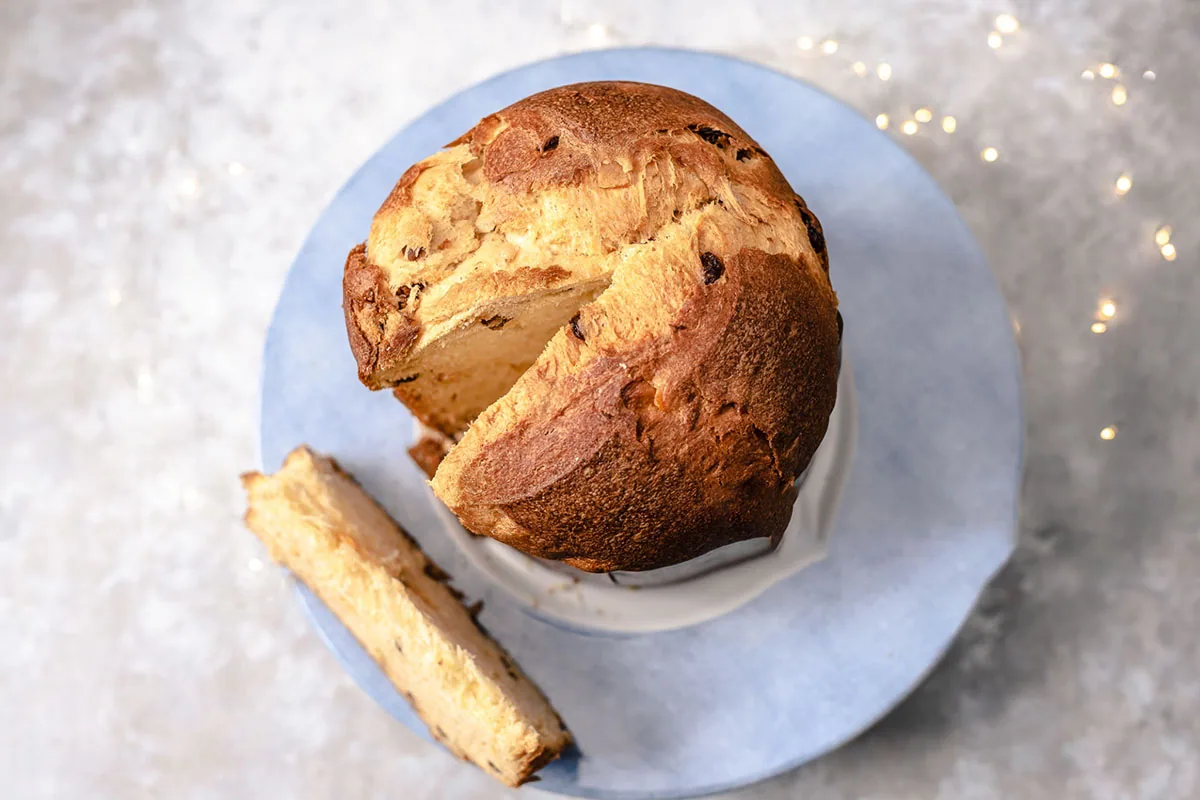
PANETTONE: the classic par excellence (though not loved by everyone because of the raisins and candied fruit), it’s always better to choose artisanal versions. A 100-gram slice contains a hefty 370 calories. The recommended portion (even at breakfast) is a 50-gram slice.
PANDORO: probably the most beloved Christmas dessert of all, especially by children. A 100-gram slice provides a full 400 calories. Don’t be fooled by its fake light look: it seems less caloric than panettone but in fact it isn’t. Here too, a single 50-gram slice is better.
CHRISTMAS YULE LOG: this delicious roll filled with soft chocolate never misses a Christmas feast. You can find super decorated ones or very simple ones, but its beauty and goodness hide a bitter secret: a slice of about 100 g of dark chocolate yule log contains 500 calories; with milk chocolate 560 calories, while with chestnut cream 300 calories. I recommend cutting a slice of 40-50 grams.
CARTELLATE: made in every kitchen in Puglia and Basilicata, they are nothing more than ribbons of thin pasta dough, made with flour, oil and white wine, wrapped around itself until it forms a sort of “rose” that is then cooked in plenty of oil. Once cooked, the cartellate are soaked in honey or simply dusted with powdered sugar. 100 grams contain about 600 calories. Little bombs, in short! One, two at most, can go with a cup of coffee!
PANPEPATO: a traditional dessert from central Italy, it is characterized by ingredients such as bitter cocoa, dark chocolate, shelled walnuts, almonds, hazelnuts, pine nuts, raisins, honey, flour and, of course, black pepper. There are many variations of this dessert and the calories can differ for each one, but for roughly 100 g of panpepato, we count 500 calories. A portion of 40-50 grams is ideal.
MARRONS GLACES: a 10-gram portion provides about 380 calories. Not exactly a few! A couple are more than enough!
NEAPOLITAN PASTIERA: its origins are well known to everyone, its calories a bit less so. A 100-gram slice provides 380. It’s better to opt for a portion of 50-60 grams.
NUTS AND DRIED FRUIT: we often eat nuts before dessert or use them to decorate sweets. So be aware that walnuts contain 680 calories per 100 grams (slightly less than almonds), while dried fruit such as apricots, prunes, blueberries and figs contains about 250 calories per 100 grams. Specifically, 100 g of dried dates equal 135 cal, 100 g of dried figs 256, 100 g of almonds 603 cal, 100 g of walnuts 582 and 100 g of pistachios 600 cal.
CANDIED FRUIT: a good example is the delicious chocolate-covered candied orange peels. For 100 grams there are a full 400 calories. Recommended portion: 70-80 grams (that is, 4-5 peels).
CANTUCCI: a typical Tuscan dessert. They are almond biscuits baked in the oven and then toasted again and dunked in Vin Santo (some people dunk them in red wine). For 100 grams the calories are plenty, reaching 456. It’s best not to overdo it and to taste just a couple (30-40 grams)
TORRONE: the white one is another great classic, whether hard or soft, for 100 grams there are 418 calories. Quite a lot! The portion I recommend is 20-30 grams (basically one rectangle).
CHRISTMAS COOKIES: they never miss from the table or are even hung on the tree as decoration. There are truly all kinds: covered with icing or silver sprinkles, then spiced with ginger, honey or cinnamon. For 100 grams we have 368 calories. A portion of 40-60 grams, that is 3-4 cookies, is perfect at tea or coffee time.
STRUFFOLI: a typical dessert of the Neapolitan tradition, they are little balls of fried dough covered with tiny, colorful sprinkles, often served with honey. 100 grams of struffoli equal 213 calories. The recommended portion is about 60-70 grams.
CARANGI: a typical dessert of the Apulian tradition, characterized by rose-shaped pastry dough that is fried and then dressed with honey and chocolate flakes. A riot of flavors that contains 300 calories per 100 grams. I recommend a portion of 50 grams at most.
CAVICIONI: these are typical desserts of the Apulian, Molise and Abruzzo traditions. They are small turnovers filled with chickpea paste, cocoa, almonds and cooked grape must. They are fried and then left to cool a little or completely. 100 grams contain 230 calories. I’d say don’t go beyond a 60-gram portion.
If you like to pair Christmas desserts with the bubbles of dry sparkling wine or champagne you need to add about 80 calories; 90 calories in the case of a sweet sparkling wine. If you are a fan of sweet wines like passito, be aware that a small glass exceeds 100 calories.
In short, all that’s left is to be careful without depriving ourselves of the pleasure of a slice of dessert. A little secret is also to not overdo the courses of the Christmas menu so we don’t have to spend the following days at the gym or in long running and walking sessions trying to burn off the extra pounds! As always, prevention is better than cure!