Bread
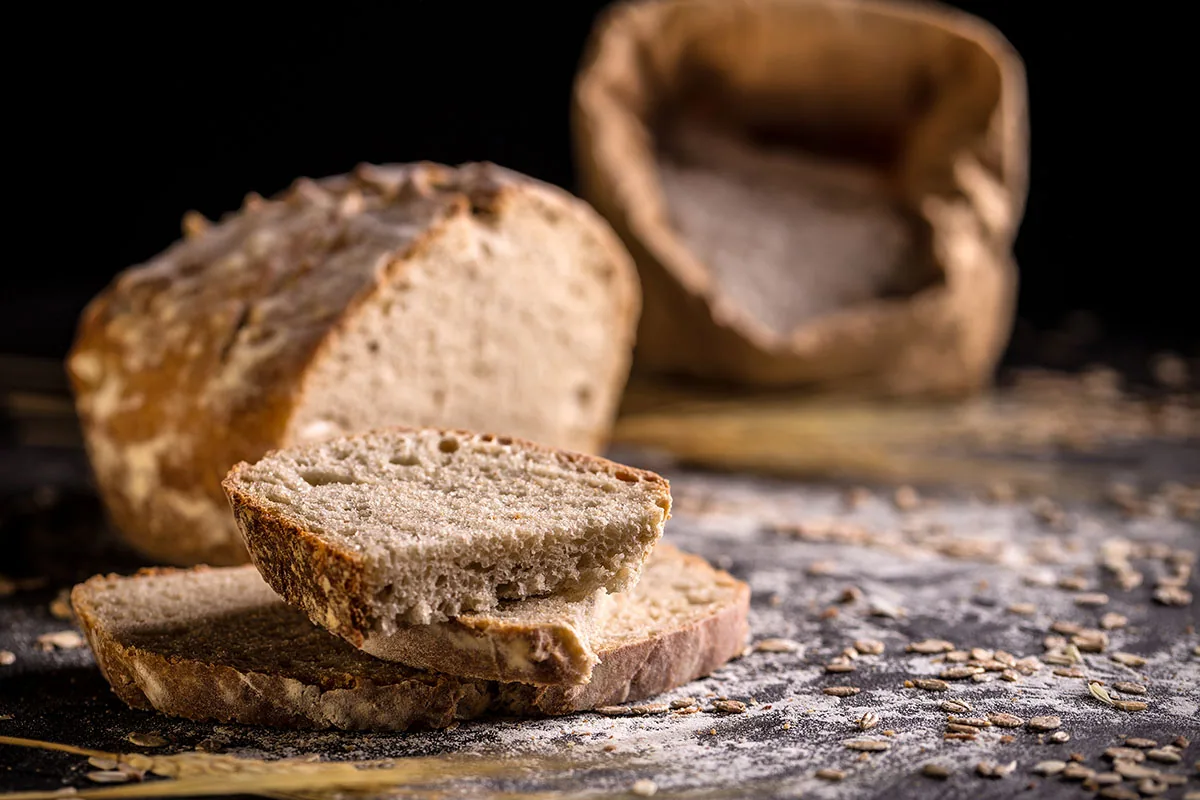
By law, bread is “the product obtained from the total or partial baking of a suitably leavened dough, prepared with wheat flours, with or without the addition of salt”.
Common bread is made by mixing water, flour, yeast and salt. With no added soluble sugars, extracts or assorted components, it is a food that is less aggressive on the endocrine function of the pancreas and produces no side effects in pathological conditions. It is absolutely contraindicated in cases of celiac disease and all gluten intolerances, in which common bread can be replaced with rice cakes or corn bread or bread made from other gluten-free flours. Even in cases of significant kidney disease, bread consumption must be drastically reduced.
In the presence of diabetes, on the other hand, toasting slices of bread should be avoided, because heat, although it reduces residual yeasts (thus also reducing the chance of intestinal bloating), breaks down an additional share of starches, making them even more bioavailable.
As for gastric function, dry untoasted bread (or the dry part excluding the soft crumb) will be useful in the treatment of gastric hyperchlorhydria because it will absorb excess gastric juices, improving the symptoms of patients who suffer from it.
Common bread made with wheat flour, in amounts varying from 50-80 g per meal, is constantly used in nutritional treatments for its supply of complex carbohydrates, to supplement or complete the three main meals (breakfast, lunch, dinner).
Would you ever have imagined, for example, that a simple bruschetta is very useful in viral and bacterial infections or colds? The molecules in garlic, in fact, are able to reach the pulmonary alveoli, exerting their therapeutic action. The vitamin A, retinol and lipoproteins of raw extra virgin olive oil will carry out an anti-infective action on the mucous membranes.
One of the preparations widely used in our culinary tradition and especially useful for athletes is “Bread and scrambled egg”; this recipe, which is easy to prepare, can be used as a breakfast or afternoon snack for children and teenagers.
It is a recipe suited to people who are asthenic and weakened and need a liver stimulus, a protein supply and all the specific nutrients of the egg. It is ideal in the treatment of diabetes because it is a balanced combination in terms of the percentage of fats, carbohydrates and proteins and induces the consumption of excess blood glucose, both because of the egg’s adrenergic stimulus and because of the activation of the liver and bile. Athletes and growing teenagers, pregnant and breastfeeding women will also benefit.
- Heat a pan with a drizzle of extra virgin olive oil, avoiding reaching the smoke point (because it would make the egg’s lipids saturated).
- Crack the egg directly into the pan and, as soon as it starts to set, scramble it with the help of a fork or a wooden spoon.
- Turn off the heat and add salt to taste with sea salt.
- Lay the scrambled egg on a slice of bread.