Pilates or Postural Gymnastics? Differences and Benefits, Even for Beginners
A sedentary lifestyle, a very demanding office job and stress can take a toll on our physical condition. Very often we don't notice but we stay for hours in positions that feel comfortable to our laziness yet are deeply wrong, because they don't require any muscle activation. How many of us end up with our legs crossed on the chair, or leaning to one side while driving? Over time, all these positions cause a range of problems, including back pain, lower-limb pain, neck pain and more.
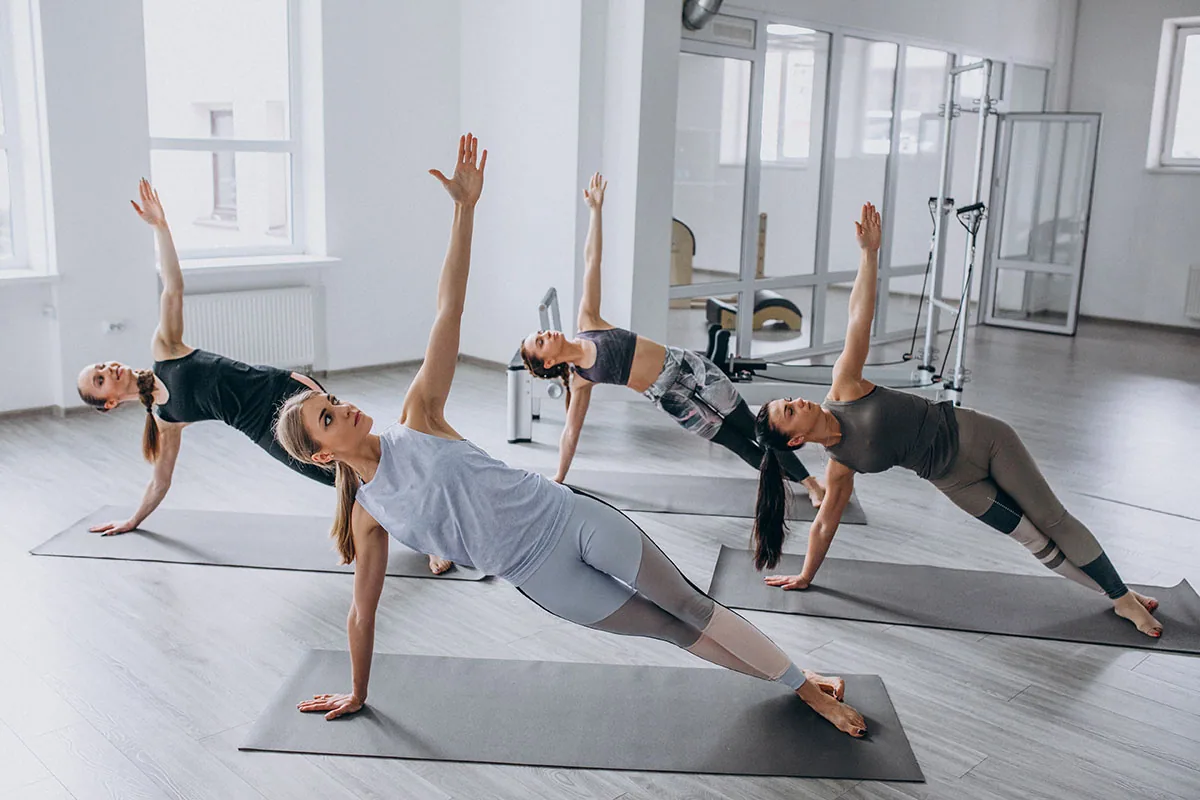
Among the many remedies recommended to prevent these problems, you will surely be offered the practice of Pilates or Postural Gymnastics. These disciplines can be practiced in fitness centers, in specialized studios or comfortably at home using various apps. But which of the two is right for you? Let's find out together what makes each of these holistic practices unique.
POSTURAL GYMNASTICS
Postural gymnastics is a discipline that aims to improve posture by strengthening muscle tone. It can be used both to relieve pain and as prevention through treatments targeting the static and dynamic muscles of our body, the structures responsible for support and movement. These muscles can in fact become stiff, shortened and weak, conditions that have a direct negative effect on our posture. The exercises practiced are aimed above all at strengthening:
- Antigravity muscles (paravertebral and abdominal), that is, the muscles that let us move and stand upright
- Respiratory muscles
- The muscles that stabilize the pelvis, to keep it aligned as we move
Posture is mostly regulated by tonic postural muscles that act and react very differently from the phasic and dynamic muscles that are usually given more importance in gym training. To optimize the function of the tonic postural muscles, you need to do quality exercises that focus on control of movement and of the position of body segments, with a strong awareness of the movement pattern and of muscle recruitment during the activity. The postural gymnastics exercises sharpen your very perception of your body and therefore help improve not only overall posture, but also a person's ability to move or sit throughout the day.
The fundamental goal of postural gymnastics is therefore quality, not frantic repetition of exercises or movements.
The key principles of postural gymnastics are:
- Quality of movement and fine awareness of what you are doing
- Slow, controlled movements
- Good balance in training the phasic and tonic muscles
- Having good joint mobility and muscle flexibility, which must match each person's individual abilities
- Doing the exercises while paying close attention to the breathing phases which can vary depending on the goal
PILATES
Pilates is a re-educational, preventive and, in theory, therapeutic (rehabilitative) discipline, focused on controlling posture – through "regulating the center of gravity" – which in turn is needed to gain more harmony and fluidity in movement. Unlike many types of exercise, the Pilates method strictly follows principles grounded in a precise philosophical and theoretical foundation. It is therefore not just a set of exercises, but a true method that, over the last sixty years of practice and observation, has been continuously developed and refined.
The goal of its creator, Joseph Hubertus Pilates, was to make people more aware of themselves, their bodies and their minds, so as to unite them into a single, dynamic and functional whole. In a sense, he tried to merge the best aspects of Western physical disciplines with those of Eastern techniques.
How the Pilates method works can be summed up as follows:
- Identifying the "problem" or imbalance, by analyzing the body's center of gravity
- Learning the Pilates technique, respecting the principles of concentration, control, fluidity, precision and breathing
- Regular, systematic practice of Pilates exercises, with regular checks of the center of gravity and posture
Download the Eathlon® app, the first 7 days of the trial are free
What is the difference between these two disciplines?
While Pilates trains the deep muscles, postural gymnastics works on the superficial back muscles. In Pilates, posterolateral breathing is important, aimed at supporting the body during training, whereas postural gymnastics helps relax the muscles through abdominal breathing.
Broadly speaking, postural gymnastics can be recommended for people with joint or structural problems, especially in the acute phase, because this method helps you learn awareness of your own body and muscle strengthening happens gradually and in a personalized way. Pilates could be the next step after postural gymnastics, or it can be recommended for those who want to strengthen the core muscles, that is, the muscles of the trunk and back. Very often this discipline is closer to the world of fitness than to the therapeutic and rehabilitative one, and for this very reason it is not recommended for people with acute musculoskeletal problems.
Nutrition and back pain
Postural problems can often be linked not only to lifestyle but also to nutrition. There are really many reasons why what you eat and your metabolism can become a cause, or at least a contributing cause, of back pain. It's quite intuitive: the intestine rests on and is firmly anchored to the vertebrae of the lower back. If the intestine isn't working well, because of inflammation or constipation, gas is very likely to build up and increase its volume, with the risk of squeezing the surrounding tissues, including the back and lumbar muscles. The same goes for the stomach, which is closely tied to the diaphragm and the muscles of the shoulder blade area, simply because they are "next-door neighbors". Food is not the only suspect behind these joint problems: poor hydration can also trigger spinal pain, since the vertebral discs are 88% water.
Thanks to its scientific method, Eathlon® is a valuable ally in tackling these problems, because healthy eating combined with the right physical activity brings greater benefits and faster, longer-lasting recovery. Thanks to the choice of foods, rich in antioxidants and minerals, and to the cooking method, Eathlon® will keep your body in a state of homeostasis, avoiding inflammation and electrolyte imbalances.
——–
Author
MATTEO ZOFFOLI
Doctor of Sport Sciences, personal trainer, fitness instructor and professional athletic coach. He is a fitness consultant and an expert in functional training.