Women’s Sports: How to Choose Based on Age and Eating Style
Women’s Sports: How to Choose Based on Age and Eating Style
As we all know, physical activity has become a “medicine” for aging healthily and preventing countless diseases. Whether you do it competitively, as a hobby or just for fun hardly matters; what counts is keeping these habits consistent. Many people spend a long time hunting for the right physical activity for them, going through one gym membership after another without ever finishing one satisfactorily. Often, in fact, the problem turns out to be not so much the desire to start exercising as the practice itself. We often listen to the advice of experts, friends and colleagues without thinking about what we really enjoy and what can make us feel good. Results, in terms of health, weight loss and better muscle tone, can be achieved in many ways, above all with a healthy lifestyle and a proper diet, without forcing ourselves to take up a discipline we don’t really enjoy.
What should I consider when choosing the right activity?
Choosing a sport according to your age can be essential to maintain good physical and mental health and women – more than men – need to pay attention to those stages of life that usually come with specific “aches and pains” and discomforts. Women, in fact, tend to be more affected by hormonal changes as they get older, and training, if well balanced and structured, can be a valuable companion for staying fit and healthy. Besides age, you should also take into account another very important aspect: nutrition. In recent years, many people have embraced various more or less restrictive eating regimens: vegan, vegetarian, raw food, ketogenic, alkaline, intermittent fasting and many more; training that isn’t aligned with the diet you are following could have negative effects on your body and risk causing injuries and problems.
Training for different age groups
Between 18 and 35
At this stage, women, like men, are stronger and more reactive and able to play any sport. Women mature physically before men: by age 14 they have already reached their maximum oxygen consumption per kilogram of body weight while men get there no earlier than 18. That is why, from the age of 18, women are ready to give their all in terms of strength and physical endurance and can train hard and consistently. Four workouts a week is an easily achievable goal, thanks both to strong physical recovery capacity and to social commitments, which up to the age of 30 are usually easier to manage. Among the various physical activities, the most popular are certainly those with a more intense physical impact: functional training, spinning, running, walking, fitboxing and weightlifting. These disciplines are great for releasing all that untapped physical power, and they are activities that involve a strong metabolic impact and high intensity, which is why they are perfect for a young, active body.
Between 35 and 50
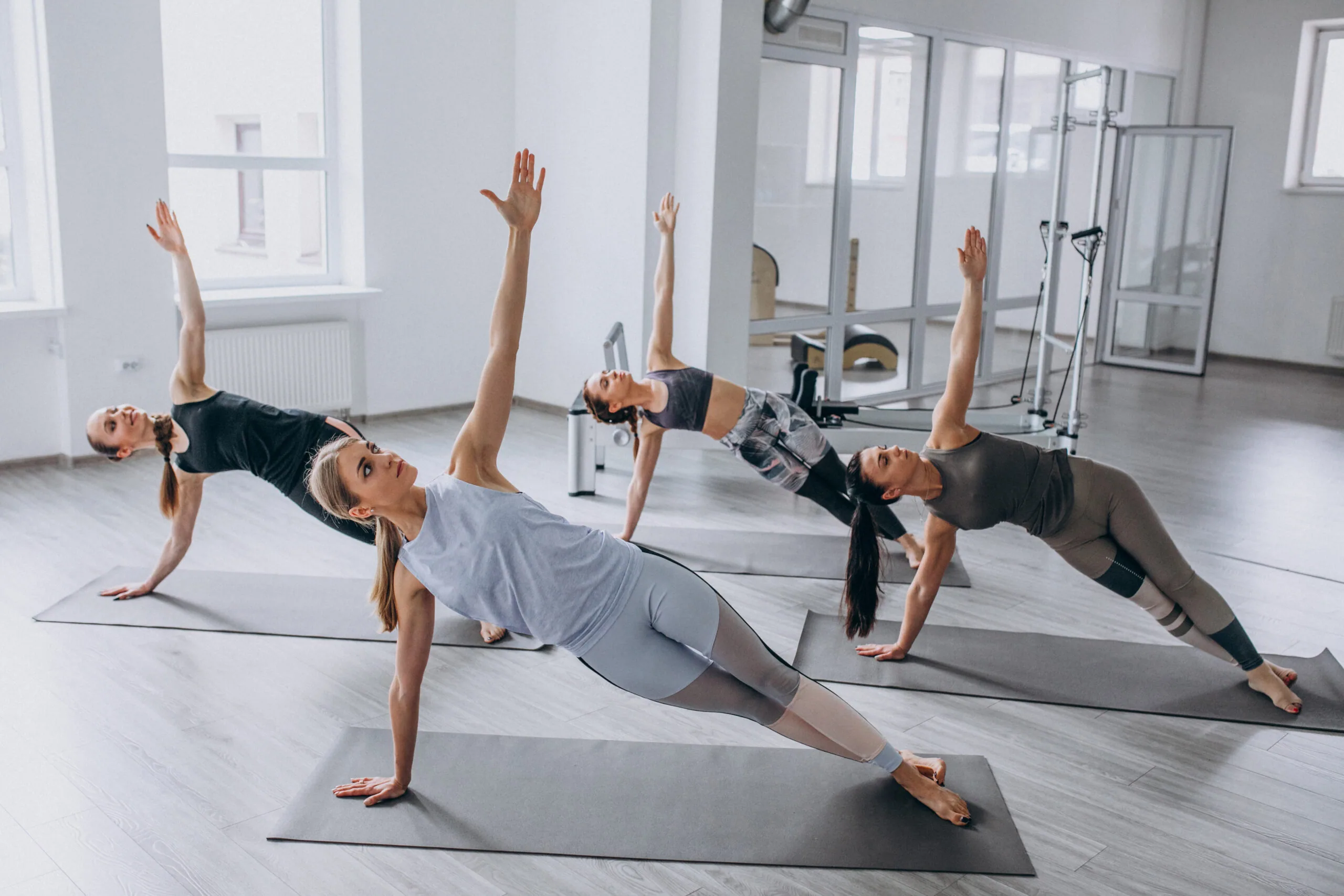
From the age of 30/40, the female metabolism slows down sharply. Keeping the same level of fitness as at 20 without changing some of your exercise and eating habits often becomes impossible, just as diving into drastic diets without any movement is almost always counterproductive, both physically and mentally. To maintain good health and well-being, it is always essential to do some physical activity. If your twenties are marked by the urge to dive headfirst into high-impact activities, as the years go by the goal becomes regaining not only your figure but also your mind-body balance. Gentler activities like Pilates and Yoga are excellent for staying in shape and preventing physical problems from appearing. These are not the only recommended activities; if you are in good health, functional training can also be done, of course with more moderate intensity, and perhaps alternating a more intense workout with a holistic practice, to get the right balance. The whole range of water-based activities is also very effective, because besides making you feel good, they reduce the load on bones and joints. Our advice, therefore, is to do two or three sessions, alternating the various activities and considering gentler disciplines with the aim of rebalancing your mind-body state.
Around 60
This is a very delicate phase, which challenges women both physically and psychologically. Keeping your eating habits and overall lifestyle steady, if possible, is truly essential to help the body stay healthy and efficient for as long as possible. Ideally, you would manage to go to the gym or the pool a couple of days a week and go out for a brisk walk outdoors a couple of times. Gentle activities are the ones to prefer, those that don’t overload the joints but keep the metabolism active and tone the muscles. At this age it is very easy to lose lean mass because of muscle catabolism.
Training and nutrition
Besides age, as mentioned before, it is very important to know your own eating habits. A diet that is too “tight” can cause problems when combined with high-intensity physical activity, because of a lack of energy reserves and the possible onset of low blood pressure, nausea and muscle cramps. Even though they have scientific validity, many diets that have become trendy in recent years could have exactly the opposite of the expected effects if combined with the wrong practices. Exhausting training – without giving the body the right recovery time – and dietary restrictions can send the energy metabolism into “protection” mode, starting to break down muscle for energy (gluconeogenesis), while preserving the precious fat reserves needed to get through this period of famine. In the third millennium we are still programmed as in Neanderthal times: save fuel and survive at all costs. If we add the fact that weight-loss diets tend to eliminate the much-demonized carbohydrates this process is emphasized even more. It is well known, in fact, that fats burn in the flame of sugars; it is clear, then, that weight loss may come largely from lean mass, the most valuable part of our body, rather than from fat mass, so in percentage terms the ratio tips in favor of fat. This makes the previous statement seem less paradoxical.
To avoid these problems, Eathlon® is a valuable ally: thanks to its scientifically proven principles, it is able to offer a varied diet personalized to our needs. The distribution of macro- and micronutrients throughout the day will give you energy and let you train at your best, achieving the results you want and recovering faster and in a more balanced way.
—
Author
MATTEO ZOFFOLI
Graduate in Sport Sciences, personal trainer, fitness instructor and professional strength and conditioning coach. He is a fitness consultant and an expert in functional training.